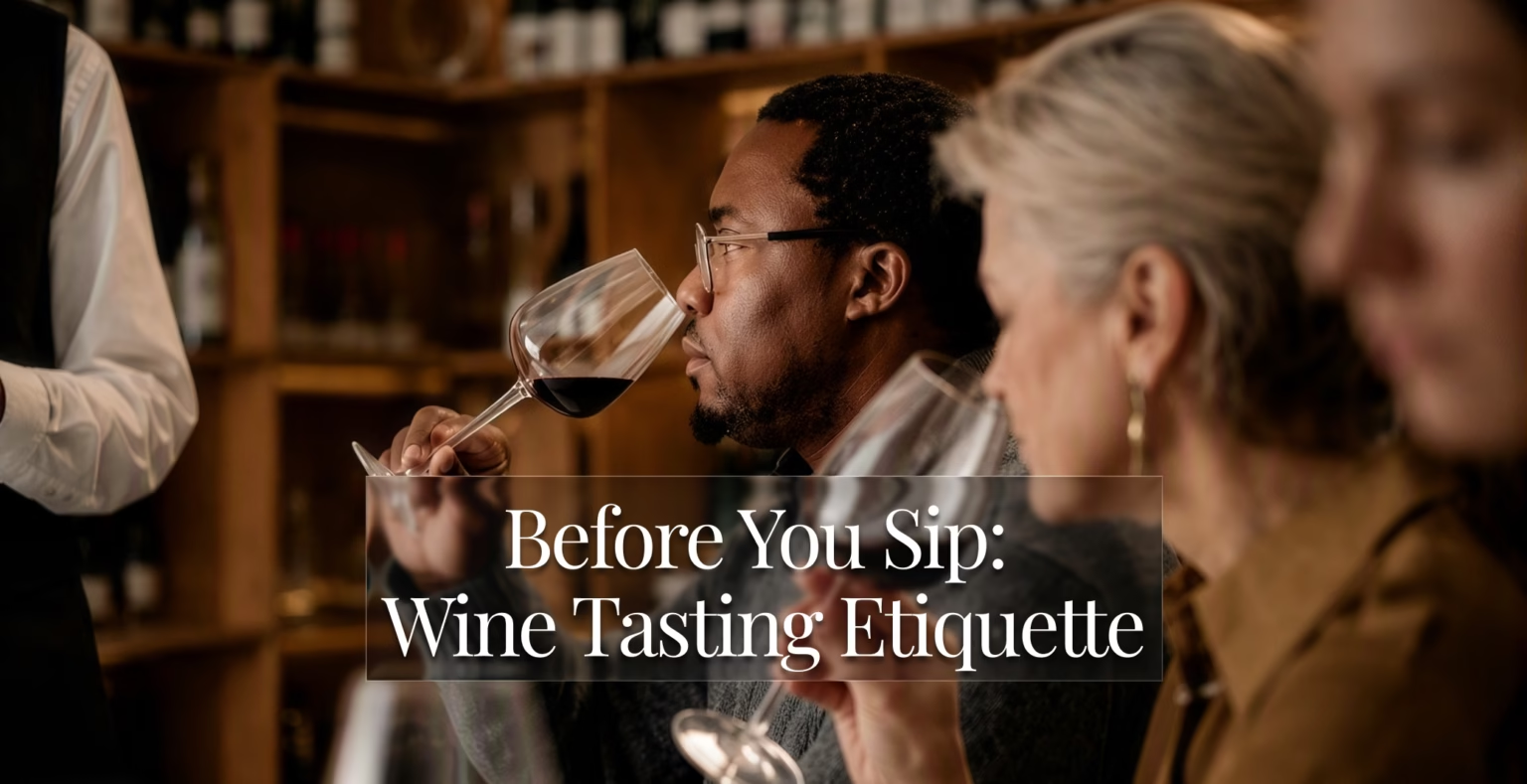
Your first winery visit should feel welcoming. But a few questions can make you hesitate: Do you finish every pour? Is it rude to spit? Should you buy a bottle afterward?
Wine tasting etiquette means respecting your host, fellow guests, and your own limits. Arrive on time, avoid strong fragrances, listen during introductions, and taste at your own pace. You can ask basic questions, decline a pour, and politely leave wine unfinished.
If you’re planning a wine tasting around Petoskey, Michigan, these simple habits will help you feel comfortable from the first introduction to the last stop.
In this guide:
- Before your visit
- How to taste wine
- Tasting room manners
- Tipping and buying bottles
- Planning a Petoskey outing
- Frequently asked questions
Before Your Visit
Confirm reservations and group details
Check each winery’s reservation requirements before arriving. Tell the host your actual group size, including anyone who will be joining without tasting. For birthdays, bachelorette outings, or other celebrations, ask about group policies when you book.
Read your confirmation for arrival instructions, tasting fees, and cancellation terms. If you’re running late, contact the winery or tour organizer promptly. A delayed arrival can affect the appointments that follow yours.
Dress for the setting
Choose comfortable, tidy clothing and shoes suited to the activities you’ve planned. An indoor tasting, outdoor patio visit, and vineyard walk may call for different footwear. Bring a layer if your itinerary includes outdoor stops.
Check for a venue-specific dress code rather than assuming every winery has the same expectations. For a casual outing, practical comfort is a useful starting point.
Skip perfume and strongly scented products
Leave strong perfume, cologne, and heavily fragranced lotions at home. Their aromas can compete with the wine for both you and nearby guests.
The Wine & Spirit Education Trust recommends avoiding strong scents and lingering flavors, including chewing gum and coffee, when preparing to assess wine. You don’t need a perfectly trained palate, but giving your senses fewer distractions helps. Read WSET’s palate preparation advice.
How to Taste Wine Without Feeling Self-Conscious
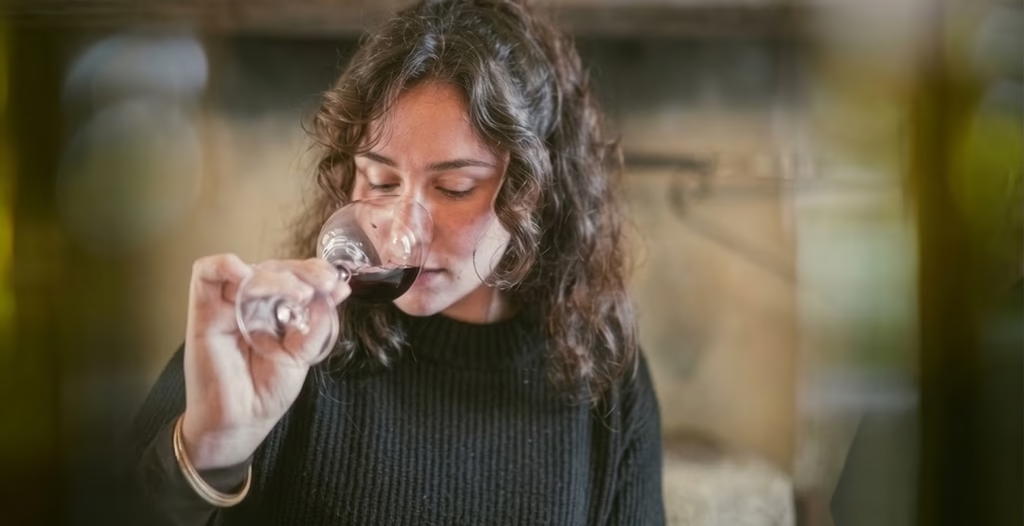
You don’t need specialized vocabulary to participate. Start with this straightforward sequence:
- Look: Notice the wine’s color.
- Swirl gently: Keep the glass on the table if that feels steadier.
- Smell: Take a gentle sniff and notice anything familiar.
- Sip: Take a small taste and pay attention to sweetness, freshness, texture, and flavor.
- Decide: Swallow or spit, then consider whether you’d like another taste.
A small pour leaves room to swirl. WSET explains that swirling helps release aromas into the air inside the glass, making them easier to smell. See WSET’s guide to tasting wine.
Use the stem when holding a stemmed glass, and swirl gently enough to keep the wine inside it. If the winery serves stemless glasses, simply handle them comfortably.
You might notice apple, berries, citrus, or an earthy smell. You might only know that you prefer one wine to another. Either observation gives you something useful to discuss with your host.
Wine Tasting Etiquette in the Tasting Room
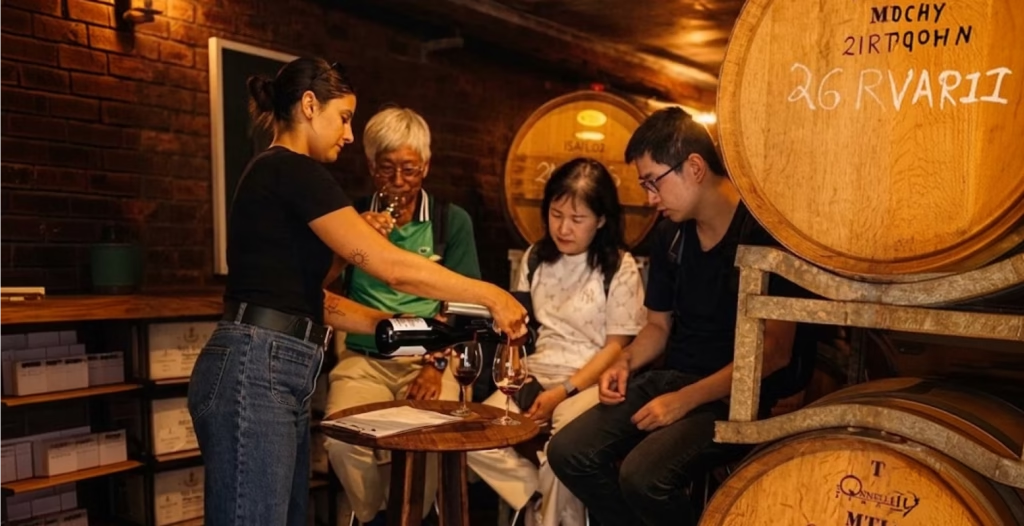
Let the host guide the experience
A tasting flight is a selection of wines served for comparison. Listen to the introduction and follow the suggested order, especially when the host explains why the wines are arranged that way.
Mention your preferences without demanding that the entire tasting change. “I usually enjoy sweeter wines—what would you suggest?” gives your host a helpful starting point. Ask whether substitutions are available before assuming they’re included.
Feel free to spit or leave wine unfinished
Spitting wine is acceptable at a tasting. You can also pour unwanted wine into the designated disposal container. Neither action needs to be treated as an insult to the winemaker.
Ask which container to use if you’re unsure. A spittoon is a vessel provided for spitting tasted wine; the host can explain the setup. Napa Valley Vintners’ tasting guidance includes spittoons as a normal part of a wine tasting. Read its tasting setup guide.
Keep the action discreet, avoid splashing, and leave shared containers where others can reach them. There’s no need to finish a pour simply because it’s in your glass.
Ask questions in everyday language
Useful questions include:
- “Which grapes are in this wine?”
- “Were the grapes grown nearby?”
- “What makes this one taste drier?”
- “What food would you serve with it?”
- “If I liked this wine, which one should I try next?”
Give your host time to answer and other guests room to participate. You don’t need to pretend you recognize every aroma mentioned in the tasting notes.
Express preferences kindly
You’re allowed to dislike a wine. Try describing your preference: “I tend to enjoy something less sweet,” or “I preferred the lighter wine.”
That gives the host information they can use. Loud criticism adds little to the conversation and can make other guests uncomfortable about enjoying the same bottle.
Share the space thoughtfully
Keep bags away from walkways, let others approach the tasting bar, and pause side conversations when the host is explaining a wine. Ask before photographing staff or other guests.
A quick photo of your glass is easy to fit into the visit. A lengthy group photo session is better saved for a suitable spot after the presentation.
Tipping and Buying Bottles
Should you tip at a wine tasting?
Tipping practices vary by winery and experience. Check whether gratuity is already included, and ask about the policy if it’s unclear. Where tips are accepted, a gratuity can acknowledge attentive, helpful service.
There isn’t one percentage that applies to every tasting room. For a tour with several stops, clarify whether tasting room gratuities and driver or guide gratuities are handled separately. Avoid assuming that one payment covers everyone.
Do you have to buy a bottle?
For an ordinary paid tasting, treat a bottle purchase as a separate choice unless the booking terms say otherwise. Buy something because you want to enjoy it again, give it as a gift, or share it with friends.
If a winery offers a tasting-fee credit with a purchase, ask what qualifies. Don’t assume the credit is automatic or that every winery offers one.
These simple responses can help with common situations:
| Situation | A considerate response |
| You don’t want the next pour | “No thank you—I’m taking a break.” |
| You want to revisit a wine | “Would another small taste be possible?” |
| You don’t enjoy a particular style | “I usually prefer something drier. What would you recommend?” |
| You aren’t buying a bottle | “Thank you for walking us through the wines.” |
| You don’t know where to empty your glass | “Which container should I use?” |
Planning a Petoskey Wine Tasting Outing
For a day around Petoskey, build your plans around confirmed appointments and realistic travel time. Leave room for questions, purchases, and getting everyone back to the meeting point.
Before your outing, confirm:
- Where and when your group should meet.
- Which reservations have been arranged.
- Whether tasting fees are included or paid separately.
- Whether food is available and outside snacks are permitted.
- Any accessibility needs or arrangements for guests who aren’t drinking.
- How transportation home will work.
Arrange a designated driver who won’t drink or other transportation before tasting. Having transportation arranged still leaves you free to skip pours, take breaks, or end your tasting early.
For group celebrations, share the schedule beforehand and appoint one person to communicate with the organizer. Respect the departure time so the next host isn’t left waiting.
Visit Petoskey Wine Tours to explore options for your outing and confirm the details that matter to your group.
Wine Tasting Etiquette FAQs
Is it rude to spit wine at a tasting?
No. Spitting is an accepted part of wine tasting. Use the container provided, ask your host if you aren’t sure where it is, and avoid splashing. You can also dispose of wine left in your glass without making a negative comment about it.
Can you wear jeans to a wine tasting?
Jeans can be a practical choice for a casual winery visit, but check the venue’s dress guidance before going. Choose a tidy outfit, comfortable shoes, and layers appropriate for your plans. An outdoor walk or special dinner may call for different clothing than an indoor tasting.
Can you refuse a wine sample?
Yes. A simple “No thank you” is enough. You can skip a particular style, ask for a smaller pour, or stop tasting altogether. Let your host know before they pour when possible, and give other members of your group the same freedom to decline.
What if you know nothing about wine?
Tell your host it’s your first tasting and describe what you normally enjoy. Familiar preferences—sweet or dry, light or rich—are useful starting points. Ask about unfamiliar terms and take notes on your favorites. You can participate fully without knowing grape varieties or tasting vocabulary.
Enjoy Your Next Tasting With Confidence
Good wine tasting etiquette comes down to consideration: arrive prepared, listen, ask questions, and respect everyone’s pace. You don’t have to like every wine or finish every sample to be a thoughtful guest.
Ready to put those tips into practice? Start planning with Petoskey Wine Tours and bring your curiosity to your next tasting.